
BepiColombo enters the home stretch to Mercury
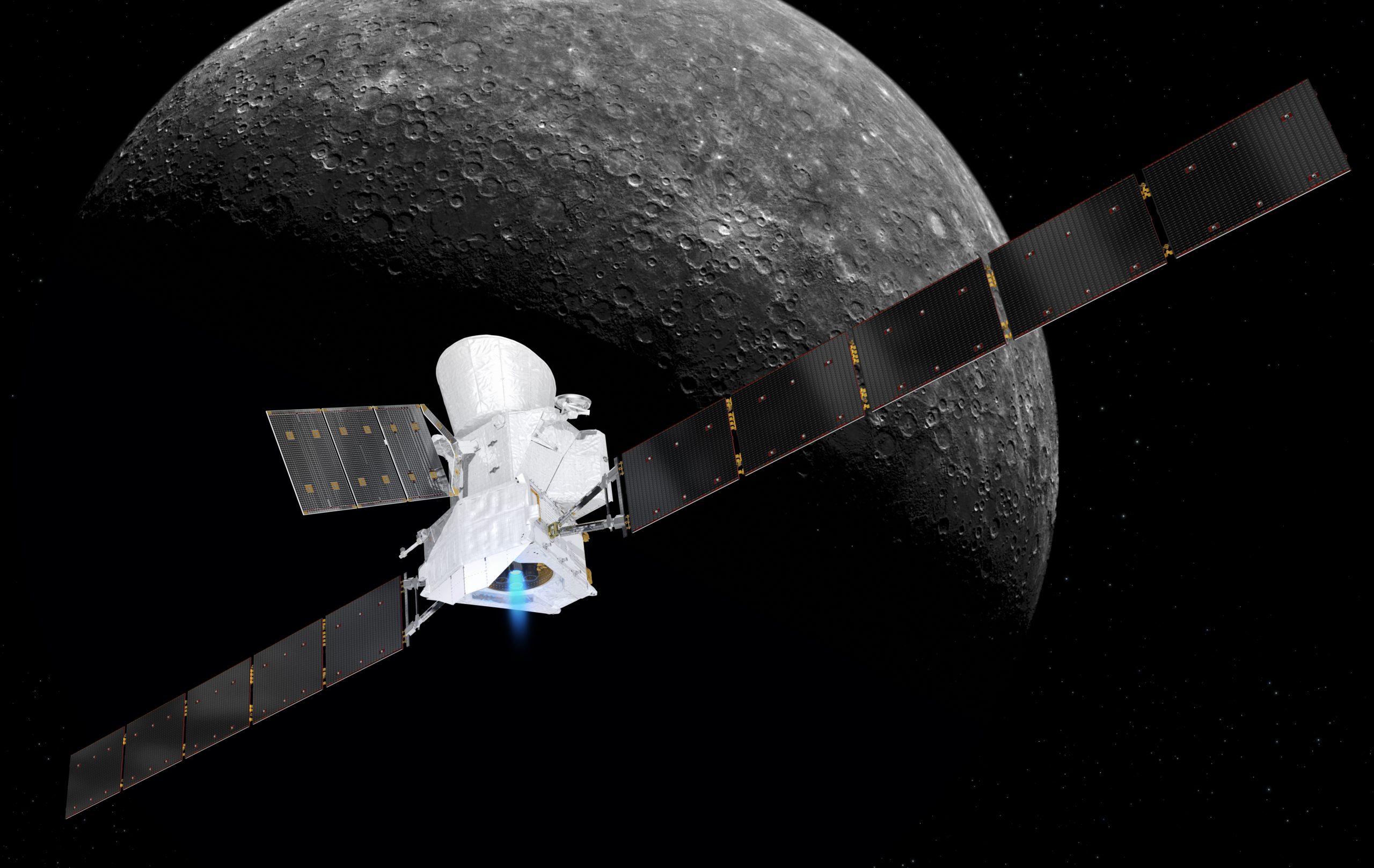
Launched in October 2018, ESA’s BepiColombo mission is nearing its goal : Mercury, the smallest rocky planet in the Solar System and the closest to the Sun. Despite this proximity, the planet remains largely unexplored. On 3 September 2026, the Mercury Transfer Module (MTM), which accompanied the spacecraft throughout its journey, was separated (see our news item on the separation of the Mercury Transfer Module, in French). Orbit insertion around Mercury will begin on 21 November 2026, and scientific observations will start with the nominal mission in April 2027.
SIMBIO-SYS : a successful first activation
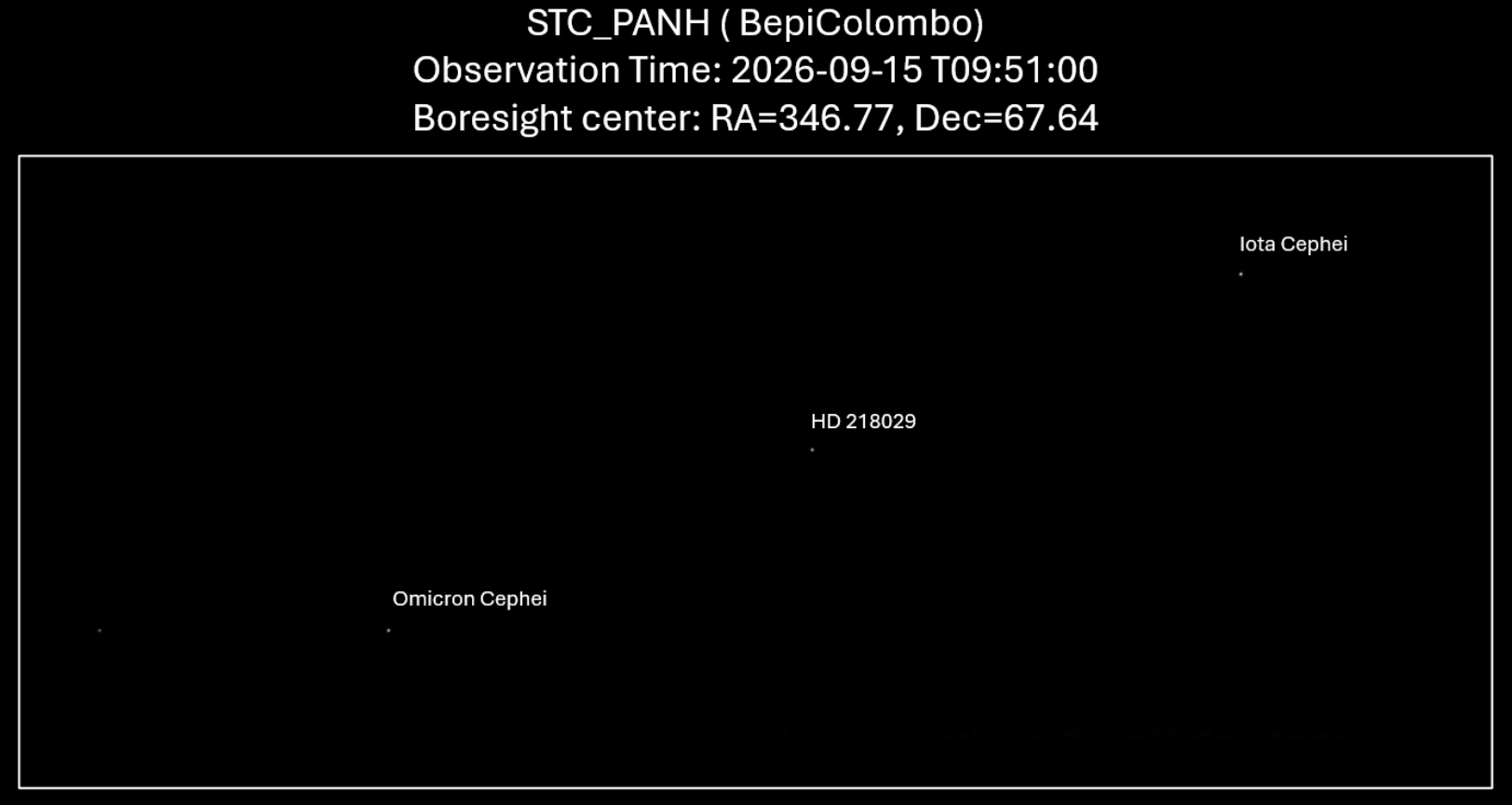
A few days after this separation, SIMBIO-SYS, the instrument suite aboard ESA’s Mercury Planetary Orbiter (MPO), was activated. It brings together three channels, STC, HRIC and VIHI, which will observe Mercury from complementary angles to build a global portrait of the planet : stereoscopic images, high-resolution images and surface composition.
All three were tested while pointing at the sky for the first time. The checks were successful and the initial analysis confirms nominal operation of the instrument. The STC channel even captured several stars. The result of an international collaboration, SIMBIO-SYS was developed with the support of the Italian Space Agency (ASI) and the backing of CNES, and its scientific leadership is provided by INAF.
“We are extremely pleased with this result, as it confirms the instrument’s potential to deliver excellent performance once we begin observing Mercury,” comments Gabriele Cremonese, INAF researcher and SIMBIO-SYS Principal Investigator.
VIHI, the “Made in LIRA” channel, works correctly
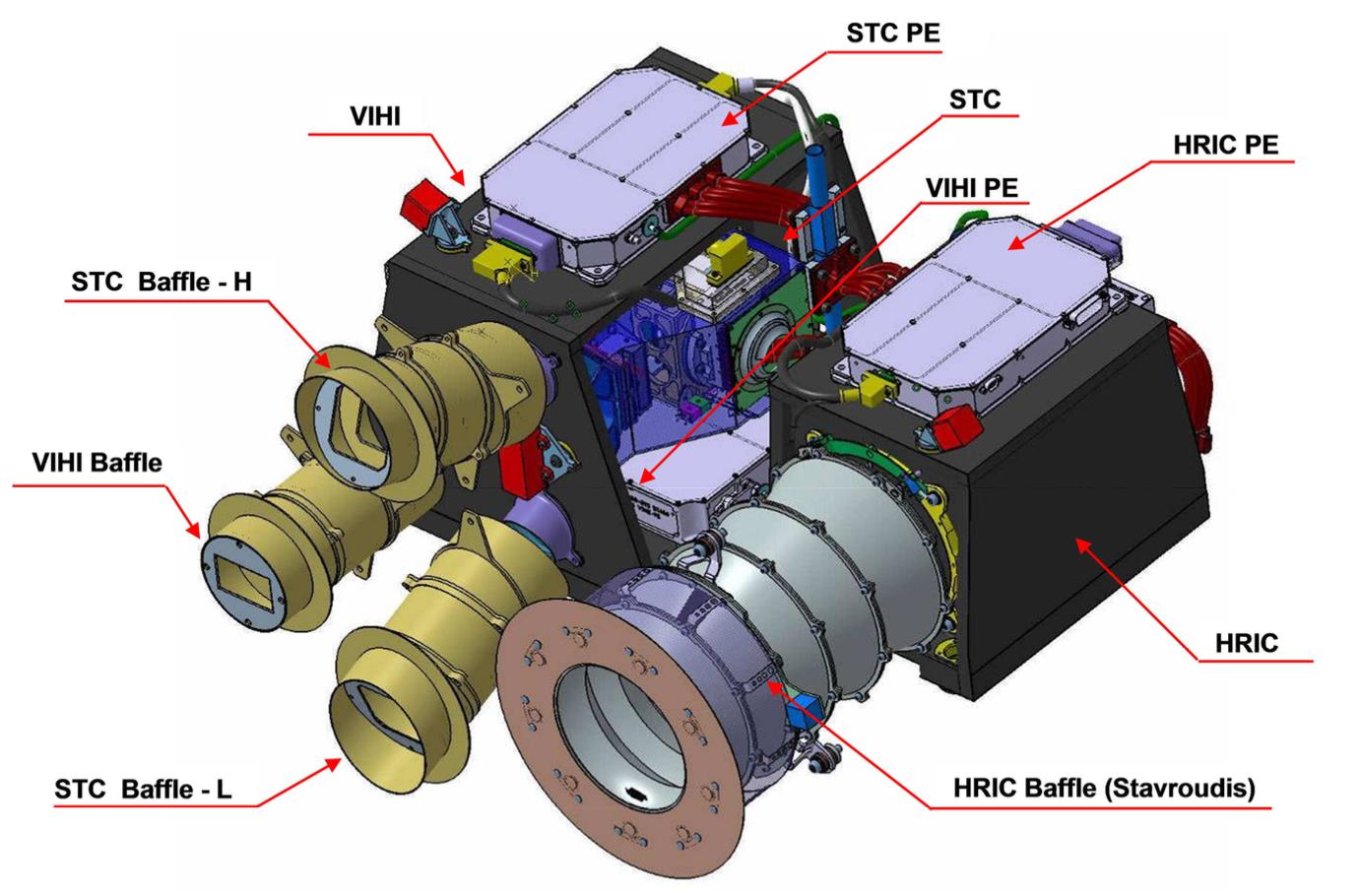
At the heart of this instrument suite, VIHI (Visible and Near-Infrared Hyperspectral Imager) is the visible and near-infrared imaging spectrometer developed at LIRA. Its scientific responsibility lies with Alain Doressoundiram, astronomer at Observatoire de Paris - PSL, at LIRA. During this first start-up, VIHI worked correctly, like the other two channels.
While the other channels will show what Mercury’s surface looks like, VIHI will analyse the light reflected by the planet to determine its mineralogical composition.
“This first operation of SIMBIO-SYS is a particularly encouraging step. VIHI’s proper functioning allows us to approach the preparation of the scientific exploitation with confidence. This instrument will notably make it possible to study the composition of Mercury’s surface in the visible and near-infrared. After eight years of travel, the scientific adventure is truly beginning,” says Alain Doressoundiram.
What’s next : heading for Mercury observations
The coming weeks will be devoted to the final adjustments of SIMBIO-SYS. For LIRA, the focus is now on preparing the scientific exploitation of VIHI’s first data, ahead of the start of Mercury observations, scheduled for April 2027.