Pupil masking and the origins of FIRST
But where are we starting from and, more importantly, where are we going ? Astronomers and astrophysicists are still on the same quest for the Holy Grail : to see further, into our galaxy or the wider universe, to see better and, above all, to understand and explain what we see. To see ever further, astronomers have been fighting for decades against blurring, the blurring of images caused by atmospheric turbulence (see the book Une histoire de flou, Pierre Léna).
Atmospheric turbulence blurs the image formed at the telescope’s focal point. It is possible to counteract these distortions by using adaptive optics, which are now fitted to all telescopes used for imaging. As this correction is never perfect, a complementary solution, which is the subject of the research presented in this article, consists of transforming the telescope into an interferometer in order to restore its ultimate angular resolution. This may seem simple... but it is quite the opposite and marks the beginning of a wonderful, very promising adventure that will continue into 2026.
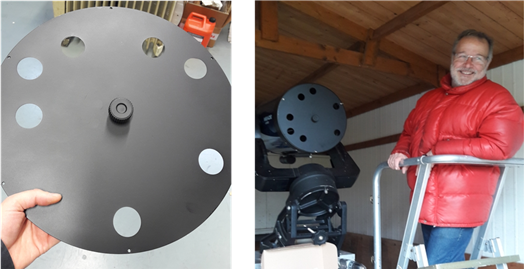
The original idea, known as "pupil masking", is to reproduce the effect of an interferometer using a device placed on the telescope’s aperture itself. This device is a mask that covers the telescope and in which "holes" are pierced. These openings act as "mini-telescopes" whose collected light interferes at the telescope’s focal point. Figure 1 illustrates how this concept is implemented for training students at the Observatory.
The holes are arranged on the mask in a non-random and non-redundant manner. This means that each pair of holes forms a unique basis. When the light from these openings is superimposed at the telescope’s focal point, what are known as "interference fringes" are revealed, which are lines of light and dark. The orientation and period of the fringes depend on that of the holes and the distance between them.
Each fringe pattern is therefore unique. These fringe images are then collected and analysed to estimate the contrast (amplitude between the bright and dark parts of the fringes) and the phase (displacement of the fringes). This is what carries the information about the object being observed and allows it to be characterised, for example to determine whether the star being observed is accompanied by another star (binary or companion). An example of interference fringes obtained at the focus of the VLT’s SPHERE instrument is shown in Figure 2 below.
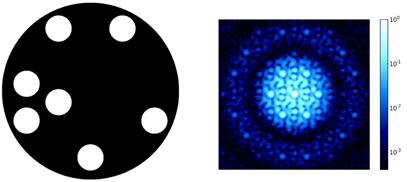
The limitation of this first device is that photon loss is very significant, since the mask typically blocks around 90% of the light reaching the telescope, allowing only a few percent to pass through the holes. Impressive results were obtained, notably at the Keck telescope in 1999, but it was still only possible to observe very bright objects. Improvements were therefore needed.
Based on this observation and the potential of the technique, Guy Perrin had the idea of injecting the light from these sub-pupils (the holes mentioned above) into optical fibres. These optical fibres, similar to those used for internet connections, transport light in such a way that interference occurs at their exit point. This idea came to him in 1999, while he was working on the ’OHANA project, which aimed to connect the Mauna Kea telescopes... via optical fibres. Four years later, Sylvestre Lacour began his thesis, focusing on the implementation of a technique known as "pupil rearrangement". The FIRST (Fibered Imager foR a Single Telescope) project was born.
Thanks to the use of optical fibres, it is possible to exploit a larger part of the telescope’s surface area because the constraint of non-redundancy disappears, thereby increasing the imaging performance of the technique tenfold. The fibres also have an essential property of filtering optical aberrations, allowing for even more accurate measurements. This rearrangement of the pupil also makes it possible to couple the formation of fringes with a spectrograph. In other words, the fringes are measured according to their wavelength, creating a spectro-interferometer. This has the great advantage of providing information on the composition of the observed object : the surface and atmosphere of a star, planet or dust cloud.
FIRST in the laboratory... then on its way to the sky !
In 2010, following Sylvestre Lacour’s thesis and Takuyki Kotani’s post-doctoral work, the FIRST instrument was developed as a prototype in the LESIA laboratory in Meudon. This version is now called FIRST-FIZ, and its key components are illustrated in Figure 3 below. The suffix FIZ refers to the way in which the beams are superimposed on the camera, as imagined by Fizeau in 1851 for stellar interferometry. Following these steps, it evolved to be mounted on a telescope, first at the Lick Observatory in California, then at the Mauna Kea Observatory in Hawaii, thanks to the thesis work of Elsa Huby.
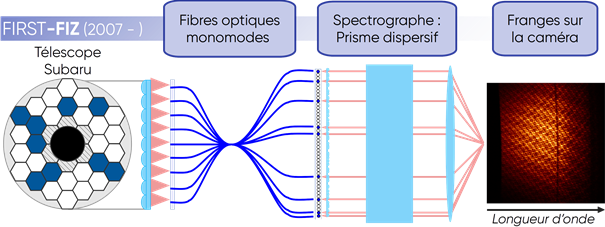
Thanks to a collaboration with Franck Marchis, it has been installed on the 3-metre Shane telescope at Lick Observatory in California. From the outset of testing, the results have been promising for future developments in pupil masking and rearrangement. Over the years of refinement, they have enabled high angular resolution spectroscopy. This made it possible to observe very compact objects, such as double star systems that are very close to each other. The sensitivity of the instrument still needed to be improved, but the detection of exoplanetary systems remained the objective of the concept developed in FIRST.
As the years passed, the technology was perfected and FIRST was no longer a prototype but a fully-fledged instrument. Another decisive encounter was with Olivier Guyon, who heads the SCExAO (Subaru Coronagraphic Extreme Adaptive Optics) platform on the 8-metre Subaru telescope at Mauna Kea, Hawaii. SCExAO aims to push the limits of detection, particularly for direct imaging of exoplanetary systems and their spectral characterisation.
Olivier Guyon proposes installing FIRST on SCExAO, which is not only a "super adaptive optics" system but also a platform for testing new concepts, thanks to Olivier’s enthusiasm and openness. Thus, thanks to this "coupling" with SCExAO, in 2013, a new step was taken for FIRST, now a module under development by SCExAO.
The shift towards photonics
In 2016, a new turning point was reached : it was decided to carry out the interferometric recombination described above using integrated optical chips, leading to the FIRST-PIC (Photonic Integrated Circuits) version. The integrated optical chip was developed in close collaboration with Guillermo Martin, a researcher at IPAG. It is the subject of post-doctoral work by Nick Cvetojevic and Harry-Dean Kenchington Goldsmith, and Kevin Barjot’s thesis, defended in 2023. This device is similar to integrated circuits in electronics, with the difference that it is not electrons that flow through the circuits, but photons, which propagate in waveguides.
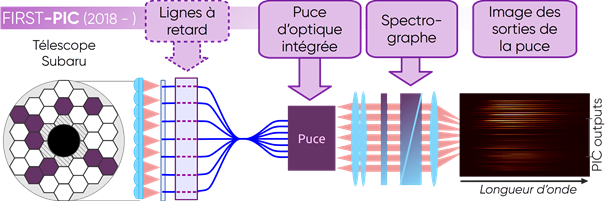
In other words, they are optical fibres engraved into a piece of glass. When two guides are brought together, the light they carry mixes : the two beams interfere. This is another way of producing interference fringes, using a stable and robust component that fits in the palm of your hand, like the chips shown in Figure 5 below.
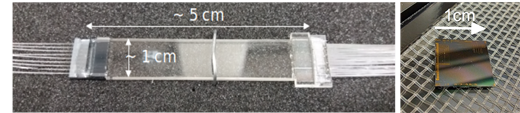
This type of technology has been developed extensively for telecom wavelengths in the infrared. However, it becomes more difficult to implement at shorter visible wavelengths, which require finer structures – only a few micrometres – to guide the light. As a result, more than half of the photons are lost along the way, and the behaviour of the chip sometimes depends heavily on the wavelength.
To date, this technology is not yet mature but promising. Work is therefore continuing to perfect it... in parallel with a new branch that has emerged from the FIRST project : the photonic lantern. This is one of the topics addressed in Manon Lallement’s thesis, defended in 2024, and the culmination of the ANR FIRST project led by Elsa Huby, which enabled developments to be carried out over the period 2021-2025.
The photonic lantern, or divide and conquer
We have now reached the point where we can discover this famous lantern, which will, in a manner of speaking, "illuminate" our Universe with a new light... in a timeframe that still needs to be refined ! But isn’t it the very nature of astronomy to take place over a long period of time ?
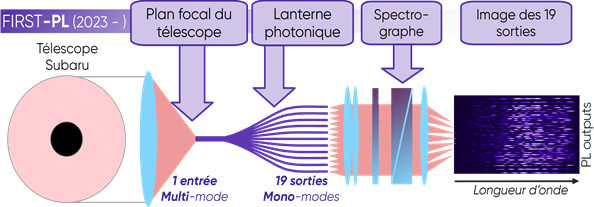
This fibre optic-based device was designed and manufactured by the Sydney Astrophotonic Instrumentation Laboratory (SAIL). It is an integral part of FIRST’s new mode, known as FIRST-PL (PL for photonic lantern), developed and jointly managed by the Paris Observatory, the University of Hawaii and the Subaru Telescope. Firstly, a key factor in favour of the lantern is the quality of transmission. It allows almost all photons (around 90%) to be collected. The lantern began to attract attention among astronomers working in imaging around 2020. However, the concept itself dates back to 2005.
Let’s take a look at the concept and how it works ! Here, there is no question of a mask. The lantern is installed directly at the telescope’s focal point, where it focuses the light. What does the lantern look like now ? It is actually a rather special optical fibre : on one side, a multimode input that accepts most of the incoming light, and on the other, 19 smaller diameter single-mode fibres (see Figure 6).
The transition between the two ends is "smooth", which is key to retaining most of the photons in the process. The lantern works by breaking down light according to its spatial structure, preserving fine details that would otherwise be indistinguishable, at very high angular resolution. In other words, the distribution of light across the 19 output fibres will differ depending on whether the object being observed is composed of a single star or two stars, or whether it is a star and a planet.
In addition, the 19 fibres of the photonic lantern feed into the same spectrograph mentioned above, which breaks down the colours. The instrument’s optical bench and the photonic lantern itself are shown in Figure 7.
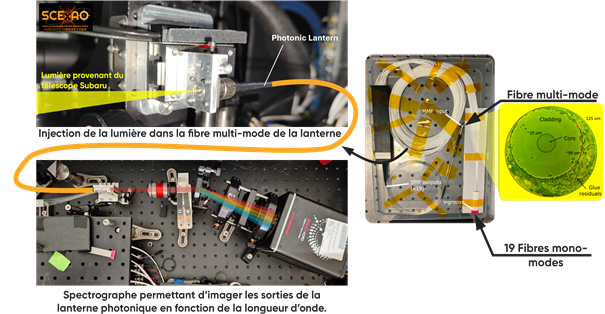
Since we are now able to utilise almost all of the light, we will be able to observe objects with lower brightness that were previously inaccessible, opening the door to interesting objects, particularly for the search for exoplanets in formation.
The latest feats of the photonic lantern
The latest published results from FIRST’s photonic lantern were presented by Yoo Jung Kim, a doctoral student at UCLA (University of California, Los Angeles). They open up new perspectives, detailed in the article published on 22 October 2025 in the journal The Astrophysical Journal Letters.
Yoo Jung Kim used the photonic lantern to observe the star beta Canis Minoris (β CMi), located about 162 light-years from Earth, a very special object. Classified as Be, this star has a very high rotation speed (several hundred kilometres per second at its equator) and is surrounded by a disc where hydrogen, heated to a very high temperature, is ionised and emits very strongly in the wavelength of the hydrogen Hα line (red colour).
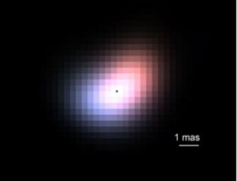
By analysing the data collected by the lantern, synchronised with that collected by an SCExAO camera, she was able to measure the amplitude of the Doppler effect coming from the disc : this allows us to measure a blue shift coming from the gas approaching us and a red shift coming from the gas moving away from us. A representation of this shift is illustrated in Figure 8. Thanks to the photonic lantern and the advanced data processing used, the team measured these shifts in the image of the star as a function of colour, with an accuracy approximately five times greater than that obtained to date.
In addition to confirming the rotation of the disc, they discovered that it was asymmetrical. Such asymmetry is unprecedented. It will be up to astrophysicists to understand the uniqueness of this system through modelling.
Spotlight on the future of the photonic lantern
The photonic lantern opens up new possibilities for researchers. Among other potential fields of research that it enables, Elsa Huby mentions the detection and characterisation of forming planets, or protoplanets. These are very bright when they accrete matter and therefore emit in the Hα line.
But first, let us remember that an essential step has just been successfully completed. In recent months, Elsa Huby, Sébastien Vievard, Sylvestre Lacour and Olivier Guyon (SCExAO) have completed the commissioning process for this instrument. It is now available to the research community. As of 2 February 2026, FIRST-PL mode has been validated and can be used for dedicated scientific observation programmes, for example, for the detection of protoplanets.
Now that this milestone has been reached, this new approach to imaging will enable astronomers and astrophysicists to observe details of smaller objects, thereby revealing certain mysteries and, as in the case of the asymmetrical disc around β CMi, leading to new mysteries that will need to be solved. Which ones ? No one can predict that at this stage. A bright future full of promise for our lantern, which we will be sure to shine a light on in the years to come. An exciting saga that we invite you to follow right now !
Acknowledgements
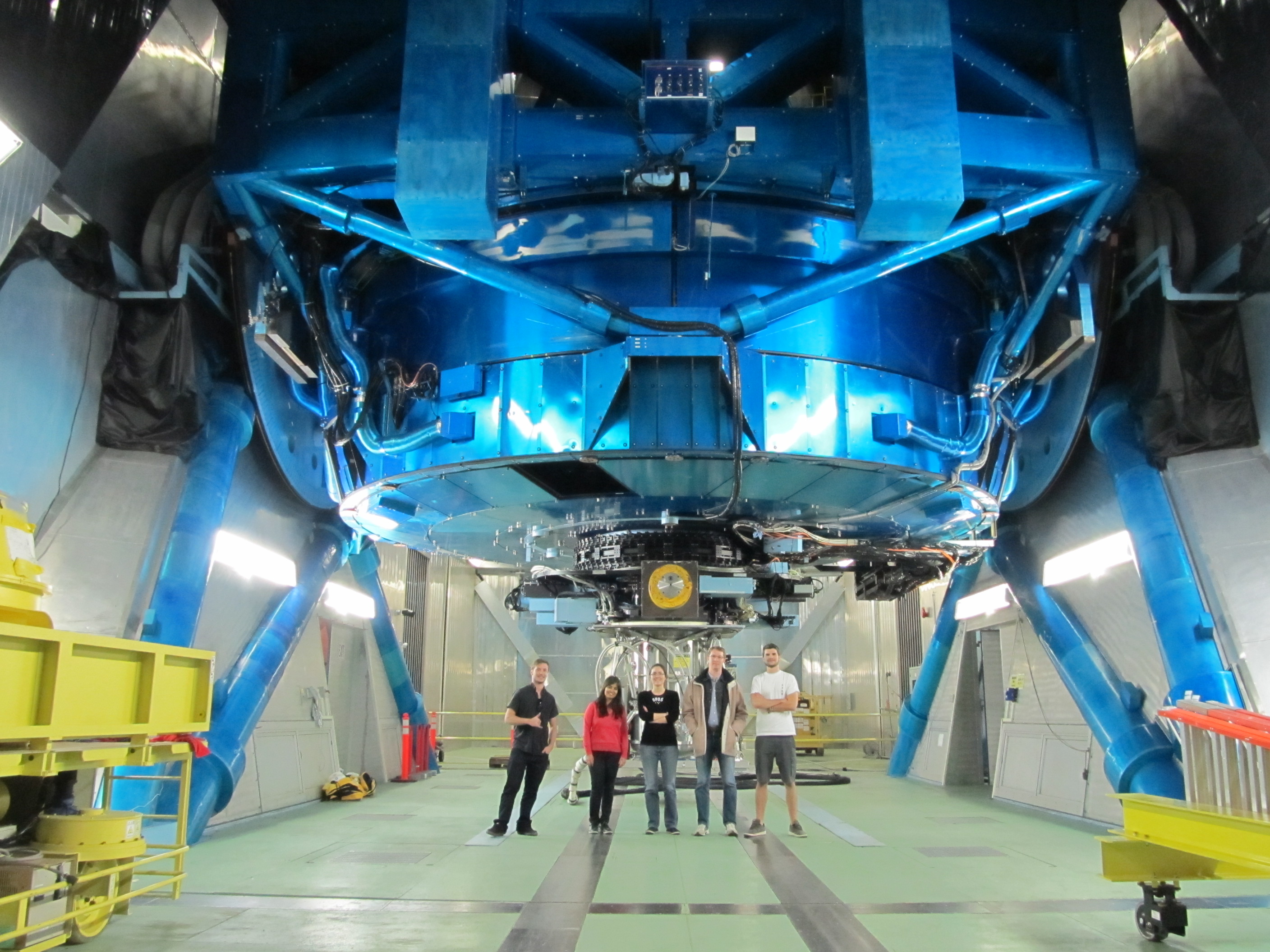
The instrumental research activities carried out in the FIRST project would not be possible without the participation of numerous colleagues from the design office and mechanical workshop, LIRA (formerly LESIA) and elsewhere. They have all contributed to the project over the years : Guy Perrin, Sylvestre Lacour, Takayuki Kotani, Elsa Huby, Claude Collin, Frédéric Chapron, Vartan Arslanyan, Pierre Fédou, Franck Marchis Gaspard Duchêne, Élodie Choquet, Elinor Gates, Olivier Lai, Julien Woillez, Sean Goeble, Olivier Guyon, Sébastien Vievard, Vincent Déo, Julien Lozi, Nemanja Jovanovic, Christophe Clergeon, Guillermo Martin, Nick Cvetocevic, Kevin Barjot, Manon Lallement, Harry-Dean Kenchington Goldsmith, Jehanne Sarrazin...