BepiColombo : Unravelling the mysteries of Mercury
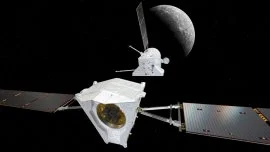
BepiColombo is a joint space mission by the European Space Agency (ESA) and the Japan Aerospace Exploration Agency (JAXA), launched on 19 October 2018 from the Guiana Space Centre in Kourou. Its objective : to reach Mercury, the smallest planet in the Solar System and the closest to the Sun, to unravel its mysteries following several decades of limited exploration.
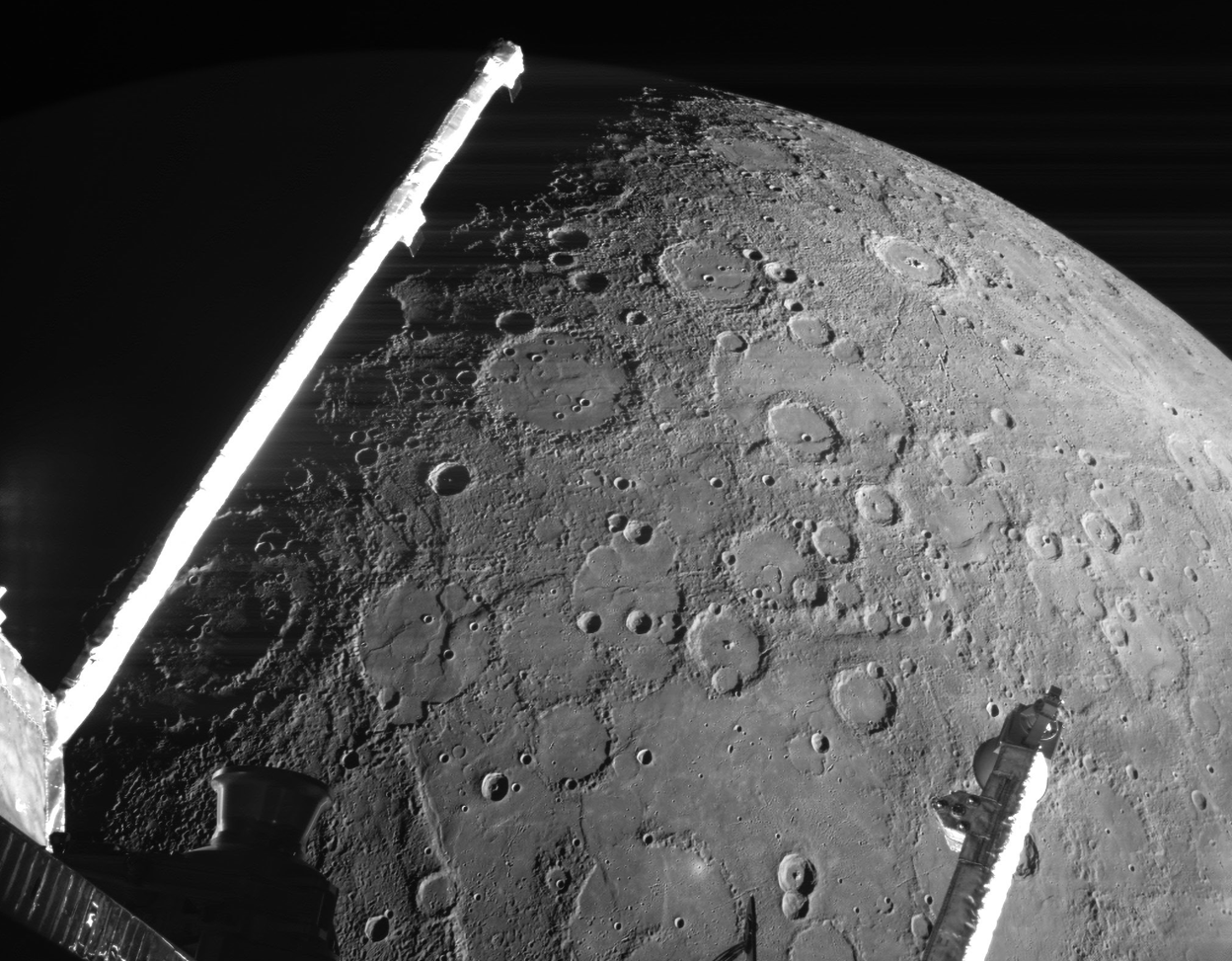
Due to its proximity to the Sun, which makes any mission particularly complex to design, Mercury remains one of the least studied terrestrial planets. Only two probes had approached it before BepiColombo : Mariner 10, which carried out simple flybys in 1974 and 1975, and MESSENGER, which entered orbit between 2011 and 2015, albeit with limited instrumentation. However, studying Mercury provides a better understanding of the formation of so-called ‘inner’ planets, those close to their star – a category to which Earth also belongs.
The BepiColombo mission aims to map the entire surface of the planet in high resolution, to verify the presence of water ice in the polar craters, and to understand the origin of its magnetic field – a feature it shares with Earth amongst the terrestrial planets.
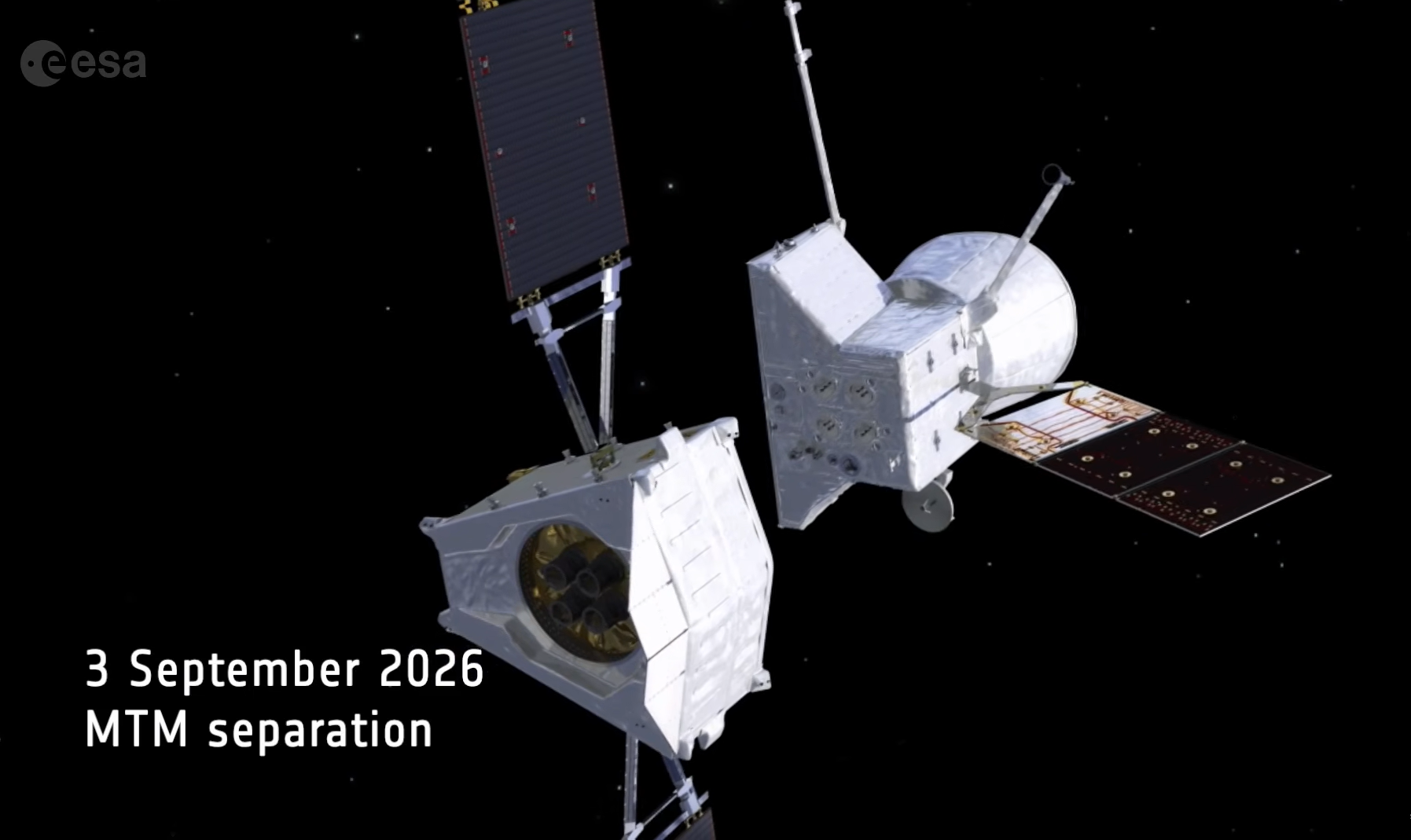
To achieve these objectives, BepiColombo comprises two orbiters : JAXA’s Japanese probe Mio (Mercury Magnetospheric Orbiter), equipped with five instruments, and ESA’s MPO (Mercury Planetary Orbiter), equipped with 11 instruments. The entire assembly is transported to Mercury by the Mercury Transfer Module (MTM), using its ion propulsion system – employed for the first time on a European interplanetary mission – combined with gravitational assists from various planets during numerous flybys, including Mercury.
Two LIRA instruments set out to explore Mercury
LIRA plays a major scientific and technical role in the BepiColombo mission, through the design and manufacture of two of the sixteen instruments on board.
LIRA has developed VIHI (Visual and Infrared Hyperspectral Imager), one of the three channels of the SIMBIO-SYS instrument carried on the MPO probe. This spectro-imager will produce a comprehensive mineralogical map of Mercury’s surface between 400 and 2000 nm, with a spatial resolution of up to 100 m in certain targeted areas. By cross-referencing mineralogical composition with surface morphology, these data will provide a better understanding of the processes of differentiation, heating and surface ageing that have shaped the planet throughout its history.
The laboratory has also designed SORBET, a high-frequency radio receiver integrated into the PWI (Plasma Waves Investigation) experiment, carried on board the Mio satellite. Operating between 2.5 kHz and 10 MHz, this instrument will, for the first time, study Mercury’s magnetosphere and its interaction with the solar wind using radio frequencies, combining remote and in situ measurements – an approach that will enable the characterisation of both the overall structure of the planet’s magnetic field and the local phenomena occurring within it.
Final stage before BepiColombo’s arrival
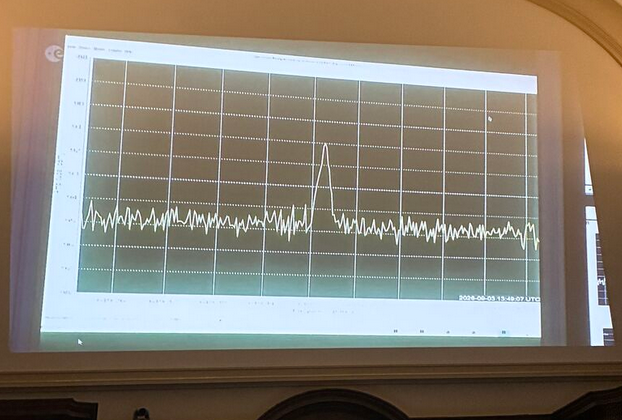
After nearly eight years of travel, a major milestone in the BepiColombo mission has just been reached : on 3 September 2026 at 15:49 (see Figure 3), the MTM successfully separated from the two scientific orbiters, MPO and Mio. This manoeuvre marks the start of the mission’s arrival phase around Mercury, one of the most complex sequences ever carried out by the European Space Agency.
MPO and Mio are now continuing their journey together, before commencing, in November 2026, a series of manoeuvres designed to place them into orbit around Mercury. This orbital insertion is one of the most delicate phases of the mission : the probe will need to be slowed down sufficiently to be captured by Mercury’s gravity, without risking a collision with the planet, all whilst in an environment where the Sun’s gravitational pull remains extremely strong.
Once this stage is complete, MPO and Mio will remain attached for a few more weeks, whilst their shared orbit stabilises. They will then separate in December 2026 : each will enter its own dedicated scientific orbit, differing in altitude and inclination and tailored to the measurements it is to carry out. This final separation will mark the true start of the mission’s scientific phase, scheduled to last for a nominal period of approximately one year.
