The Milky Way is the result of a long history of collisions and mergers with smaller galaxies. Among these, Gaia-Sausage-Enceladus is thought to have played a major role in the evolution of our Galaxy. This dwarf galaxy, whose mass was between one-tenth and one-quarter that of the early Milky Way, is thought to have collided with it around 11 billion years ago. This event is believed to have triggered an intense episode of star and globular cluster formation, whilst permanently reshaping the structure of the young Milky Way.
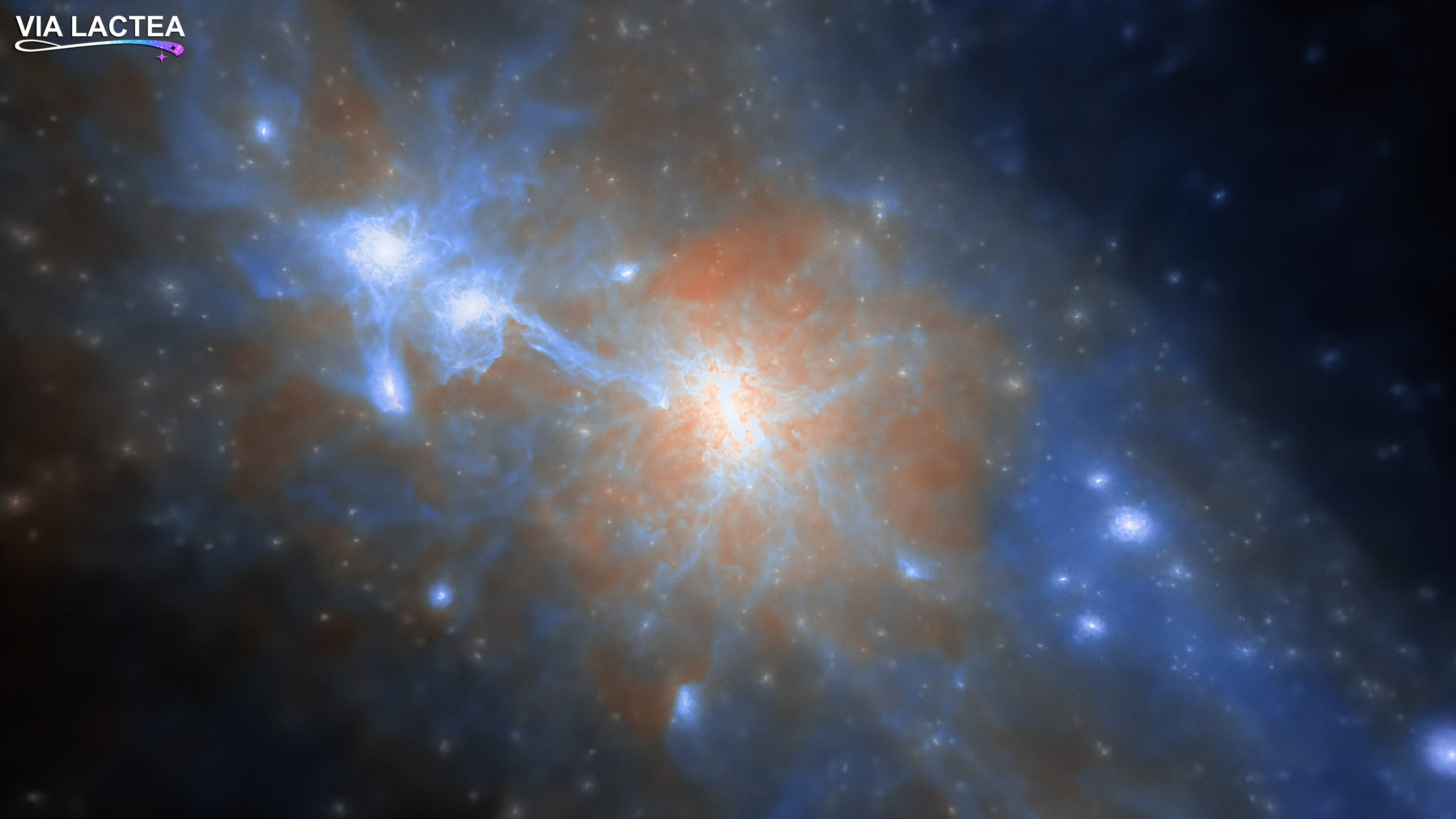
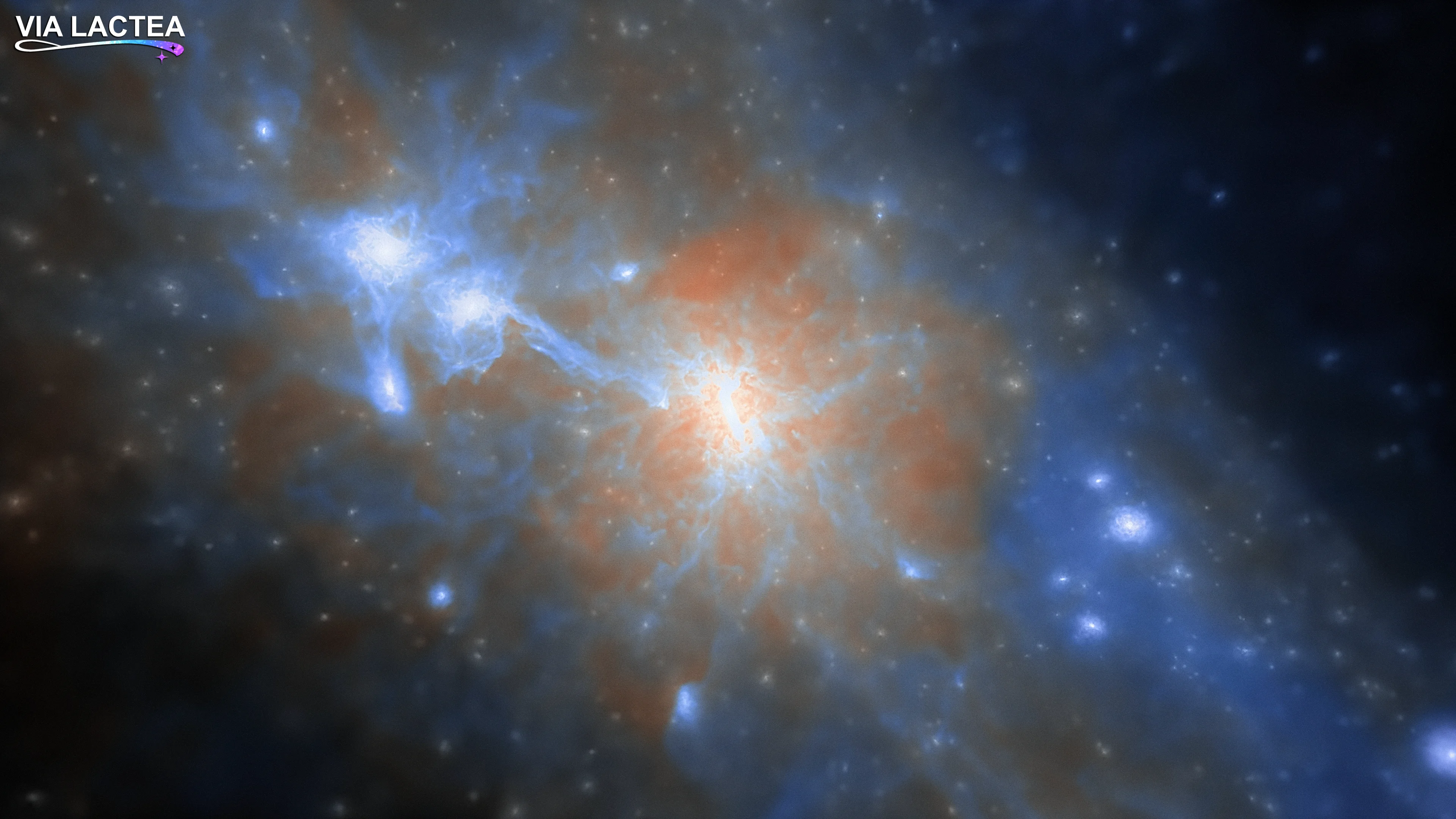
This image illustrates a simulation of the evolution of a spiral galaxy similar to the Milky Way over 13.5 billion years. At the centre is a galaxy analogous to what our Galaxy may have been in the past, in continuous interaction with several smaller galaxies that are gradually merging with it. The major collision visible on the left illustrates an event comparable to the merger with Gaia-Sausage-Enceladus. Dark matter is shown in grey, whilst cosmic gas is coloured : the coldest regions appear blue and the hottest red.