The rarity of circumbinary planets

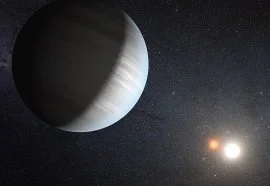
Understanding how planets form sheds light on the birth of our solar system and our own origins. Unlike the Sun, the only star in the solar system, most stars are born in pairs or groups in multiple systems. It is therefore crucial to estimate the effect of this binary nature on planetary formation, known as circumbinary formation.
However, detections of planets in these systems — sometimes referred to as Tatooine-type planets in reference to Star Wars — remain exceptionally rare. Today, we know of nearly 800 binary systems hosting exoplanets. A recent study conducted by Philippe Thébault, a researcher at LIRA, shows that the presence of a second star disrupts planetary formation, even when the two stars are very far apart — sometimes at distances several hundred times greater than that between the Earth and the Sun. In fact, only 22% of stars with planets have a stellar companion, while 46% of stars in our Galaxy are part of a binary system.
Among this set of known binary systems, only six planets have been detected by direct imaging, i.e. observed directly on images. This is far too limited a sample, even though this technique provides crucial information about the physical properties of planets and a more solid understanding of their formation mechanisms, compared to those at work around single stars.
A planet hidden in archives
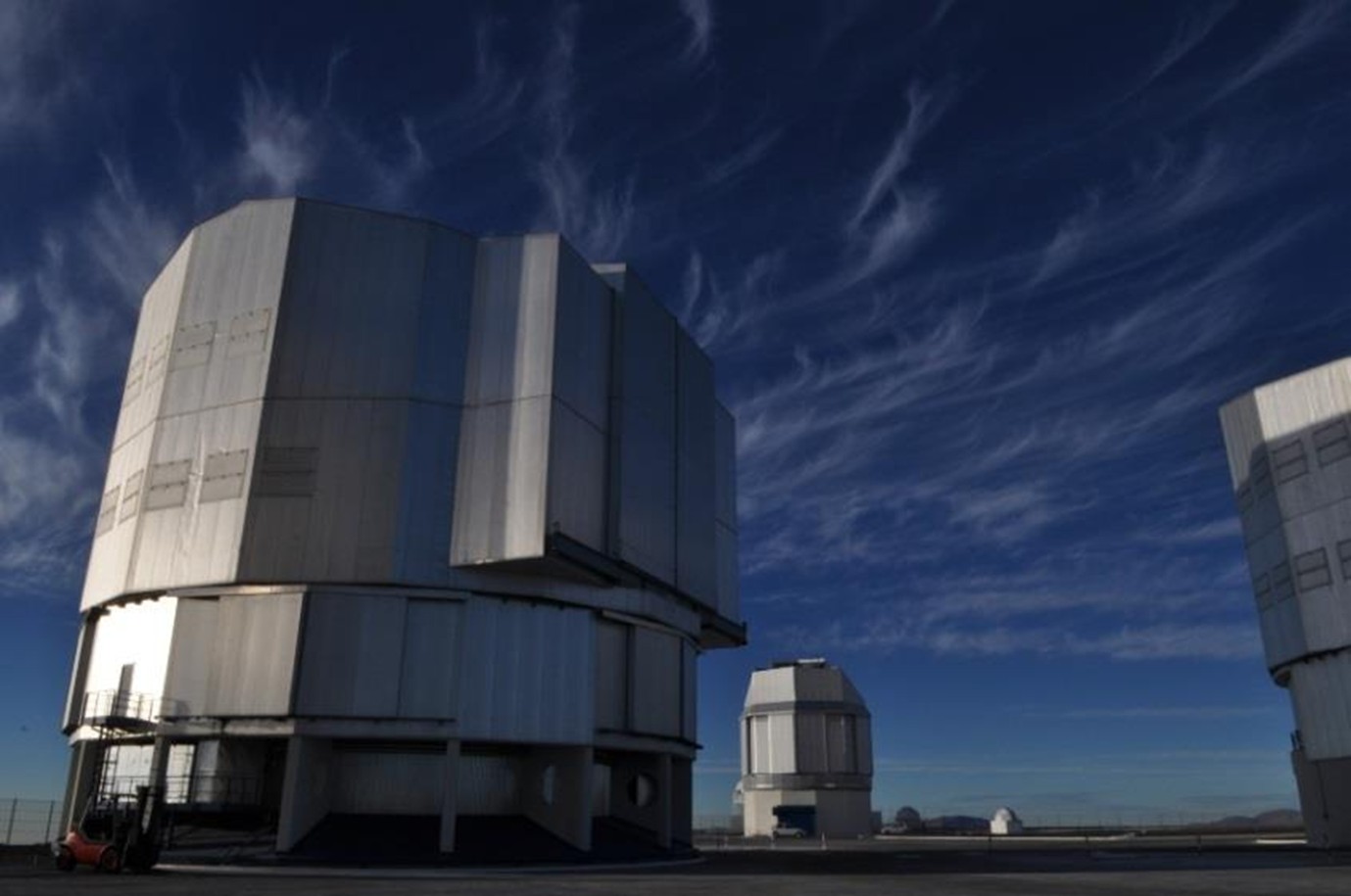
As part of the ERC COBREX project, which aims to systematically reanalyse thousands of archival observations using advanced tools that significantly improve planet detection, the team of scientists identified several candidates that had escaped initial analyses of data from the Gemini Planet Imager (GPI) instrument on the Gemini South telescope. One of them orbited HD 143811, a young binary system, approximately 15 million years old, located 137 parsecs away in the Scorpius-Centaurus association, within the closest star nursery to us.
Observed in 2016 and 2019 with GPI, this candidate appeared to accompany the stars in their movement, but its weak signal in 2019 left some doubt. A new observation with the VLT’s SPHERE instrument in July 2025 settled the matter : the companion was shining exactly where expected for an orbiting planet. Thanks to this effort, the team confirmed the existence of HD 143811 b, a planet orbiting two binary stars. It thus becomes the seventh circumbinary planet to be imaged and joins the very select group of around 50 planets directly photographed over the last 20 years.
This discovery was also independently corroborated by an American team, which simultaneously detected the planet using data from the Keck telescope (Jones et al., 2025), further strengthening the robustness of the result.
HD 143811 b, the circumbinary planet with particularly interesting properties
HD 143811 b differs from the six other circumbinary planets imaged to date. It is the closest to its system, at only 60 astronomical units, a distance more comparable to that observed in our Solar System, whereas other planets of this type are generally located several hundred astronomical units away. It is also the least massive in this category.
Nine years of observations have shown that it orbits its two stars in approximately 320 years on a nearly circular trajectory, seen almost face-on from Earth. Analysis of its light has revealed a surface temperature of 1000 Kelvin, corresponding to a gas planet 6.1 times more massive than Jupiter, but only 40% larger. The planet still appears hot and inflated, like all gas giants in their youth.
Next observations
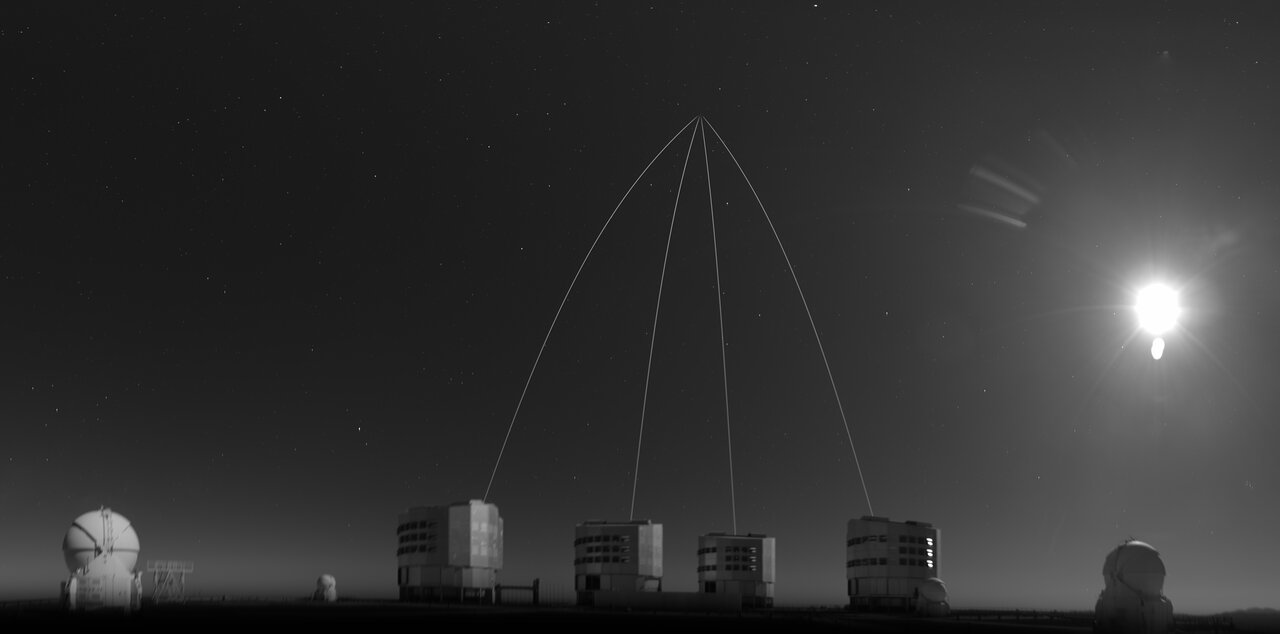
In the coming months, this team plans to use the GRAVITY+ instruments on the VLT and the MIRI coronagraph on the James Webb Space Telescope, two instruments with significant LIRA contributions, to refine its orbit and characterise its atmospheric composition in detail. This discovery also illustrates the potential of reanalysing archives with modern algorithms. The precise characterisation of this new circumbinary planet and comparison with other young planets will be crucial to understanding the formation mechanisms of these fascinating worlds.
Contacts : Johan Mazoyer & Anne-Marie Lagrange
Find out more :
- CNRS press release
- Northwester press release
- ERC COBREX
- Article by the European team : V. Squicciarini et al., "GPI+SPHERE detection of a 6.1MJup circumbinary planet around HD 143811", Astronomy & Astrophysics, septembre 2025
- Article by the American team : Jones et al 2025
