The celestial spectacle at the end of the year
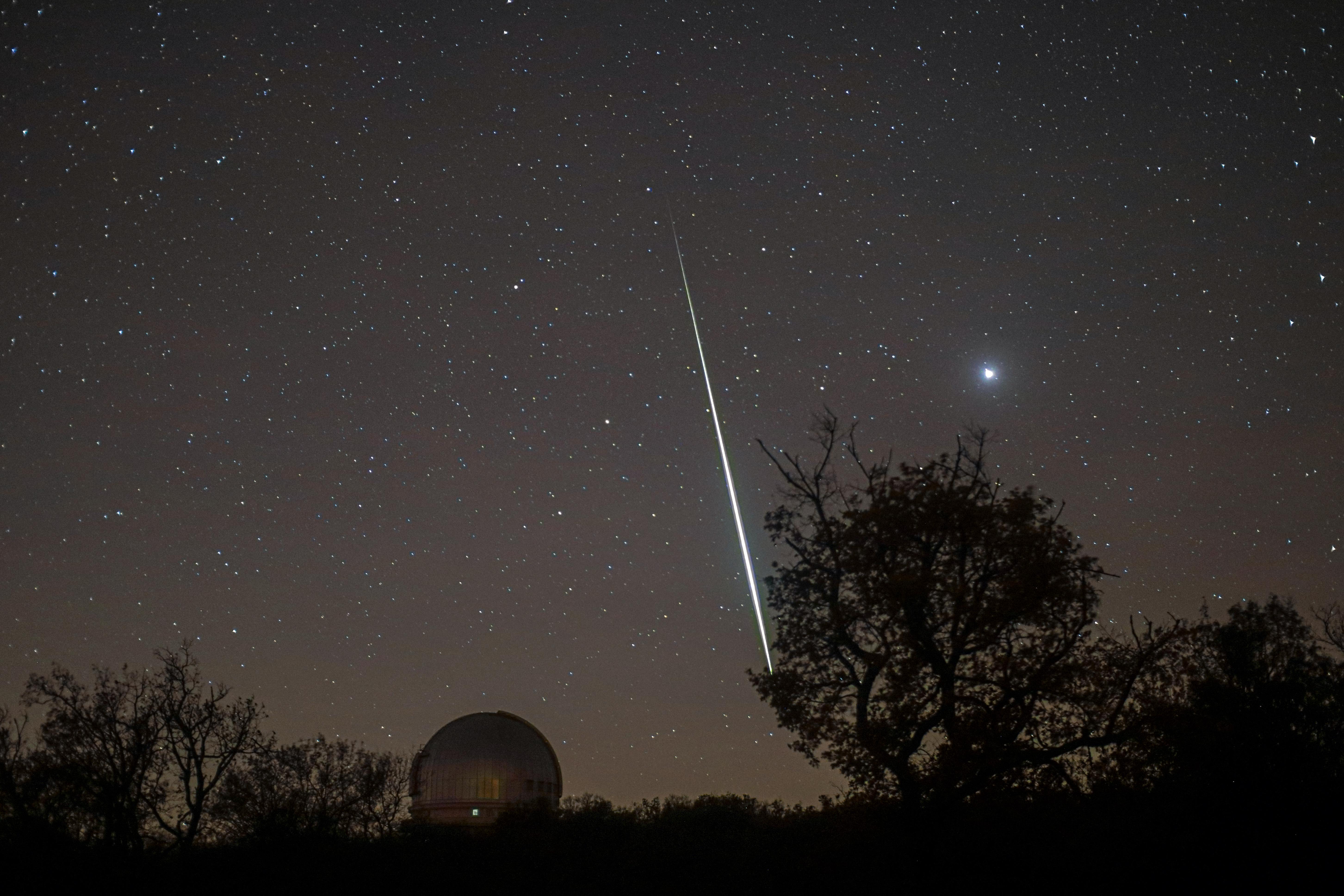
The Geminids are a meteor shower—or more commonly known as "shooting stars"—observed every year between December 12 and 14. Their peak varies by one or two days depending on leap years. With 100 to 150 meteors per hour under ideal viewing conditions, they are classified by the International Meteor Organization (IMO) as the most abundant shower of the year, closely followed by the famous Perseids in August.
This meteor shower was first observed in 1861 by English astronomer Robert Philips Greg from Manchester. However, it wasn’t until the 1980s that its origin was identified. The culprit ? Asteroid 3200 Phaethon, which makes the Geminids particularly unique : asteroids do not usually release enough debris into their orbit to generate a meteor shower that can be observed from Earth. Normally, these phenomena are caused by dust released by comets as they degas when approaching the Sun. When the Earth passes through this trail, these grains enter the atmosphere and produce a brief flash of light as they disintegrate.
The mystery surrounding the Geminids continues
For four decades, astronomers have been trying to understand how an asteroid with an orbital period of approximately 1.5 years can produce so many particles. One hypothesis suggests that 3200 Phaethon is the extinct nucleus of an ancient comet that was very active several thousand years ago. However, its spectrum and orbit confirm that it is indeed an asteroid—a paradox that continues to fuel research.
Research devoted to the Geminids, particularly that conducted by Jérémie Vaubaillon of the Laboratoire Temps-Espace (LTE) at the Paris-PSL Observatory, now provides a better understanding of the behavior of 3200 Phaethon. It also serves as a test bed for new technologies for detecting and imaging transient phenomena in the sky.
Some tips for observing the Geminids
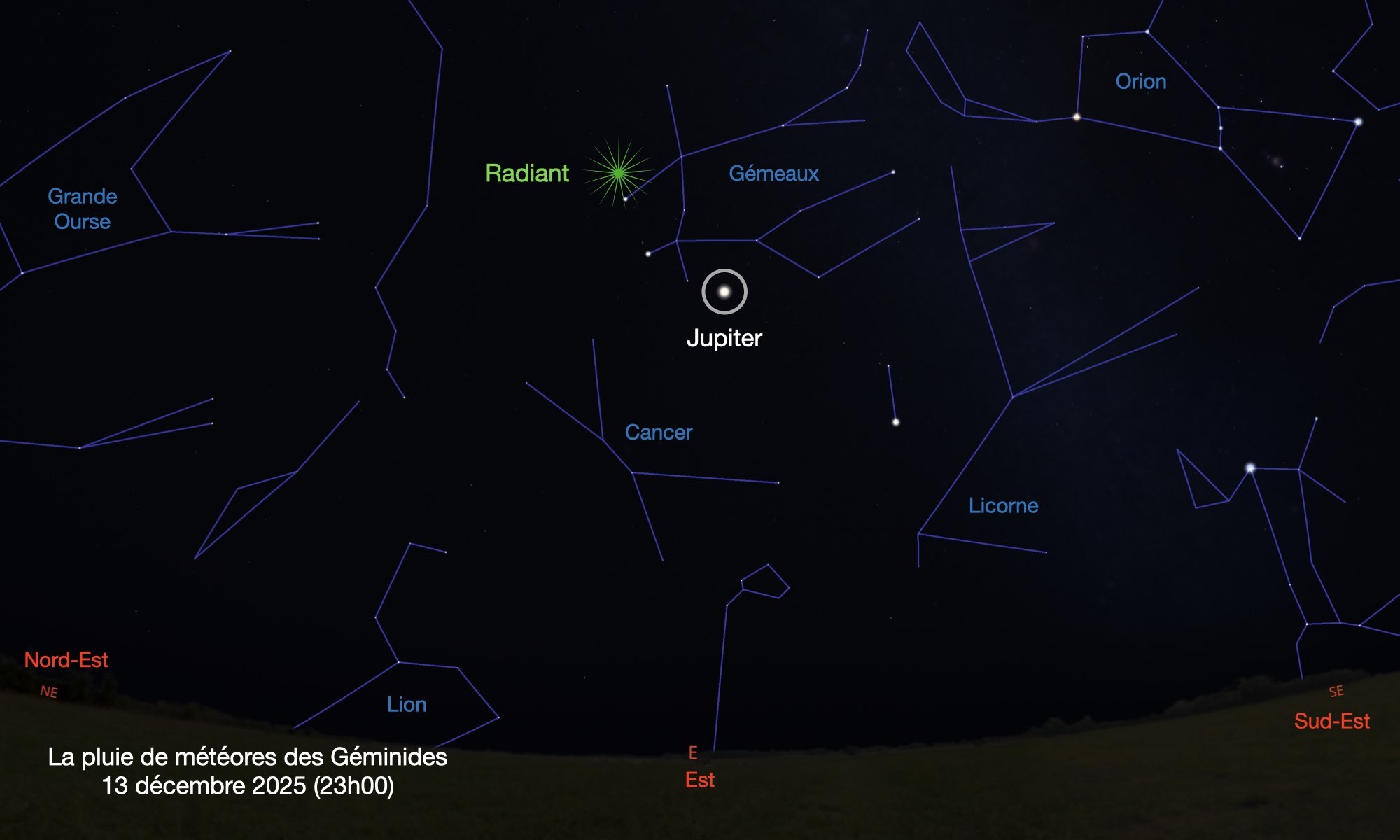
This year, the peak will occur on December 14 at 9 a.m. CET, in broad daylight. Nevertheless, the night before—from Saturday to Sunday—promises to be a beautiful spectacle, as the swarm’s activity increases several hours before its peak. In addition, the Moon will not rise until around 3 a.m., offering a particularly dark sky until then, provided you are far from sources of light pollution.
Which direction should you look ? As their name suggests, meteors originate from the constellation Gemini, where the "radiant" is located. However, to fully enjoy the show, it is advisable not to stare directly at this point : you will often only see a brief flash. It is better to look about 45° away from the radiant, where the trajectories appear longer and more spectacular.
Finally, to admire this spectacle, there’s nothing like your own eyes ! Make yourself comfortable—on a deck chair, for example—and warm, in a dark, unobstructed place. If you want to capture the moment, use a camera on a tripod with a wide-angle lens set to its maximum aperture (ideally around f/1.8). A long exposure will allow you to capture the luminous trail of the meteors.
Contact : Jérémie Vaubaillon
