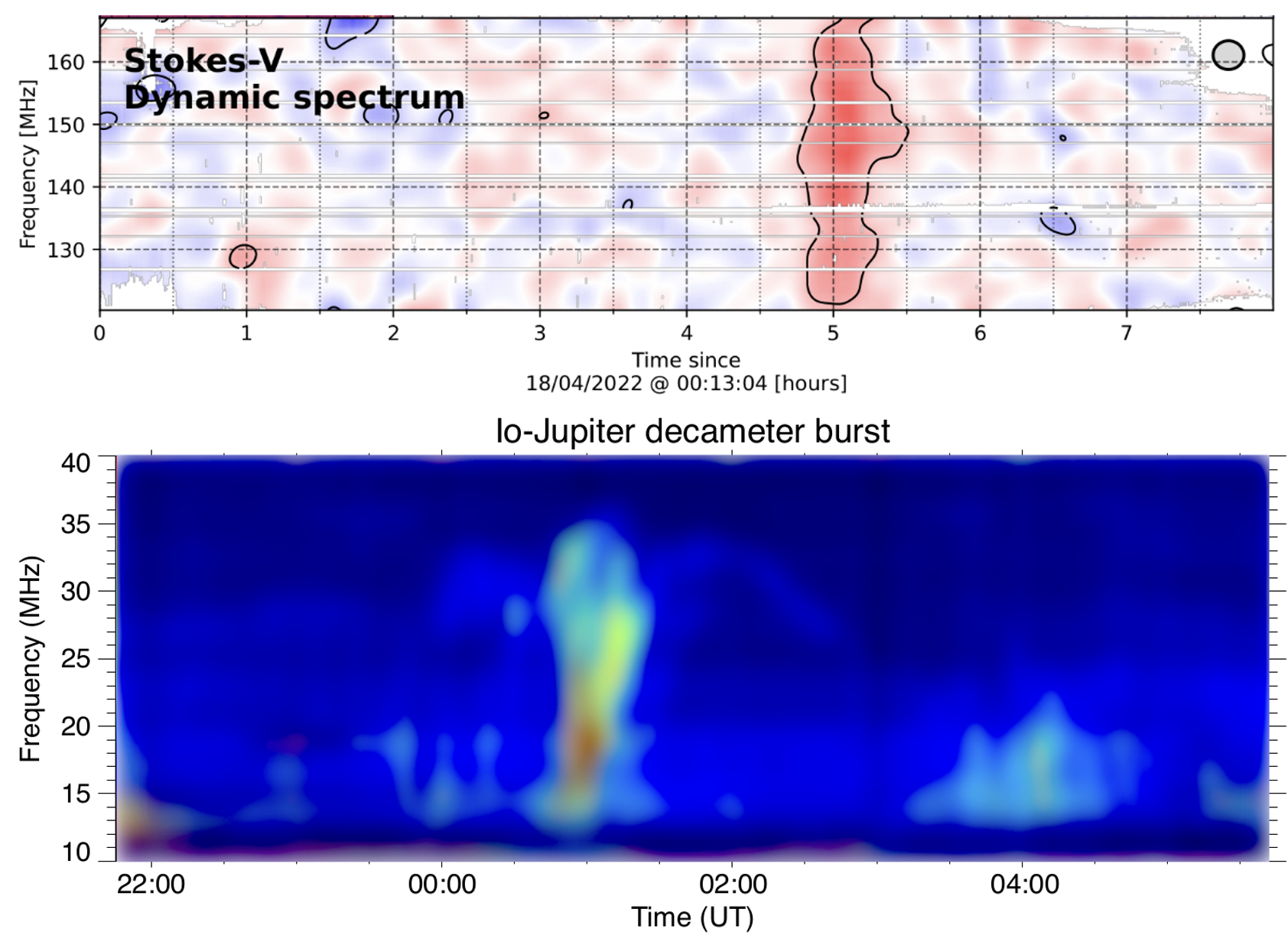
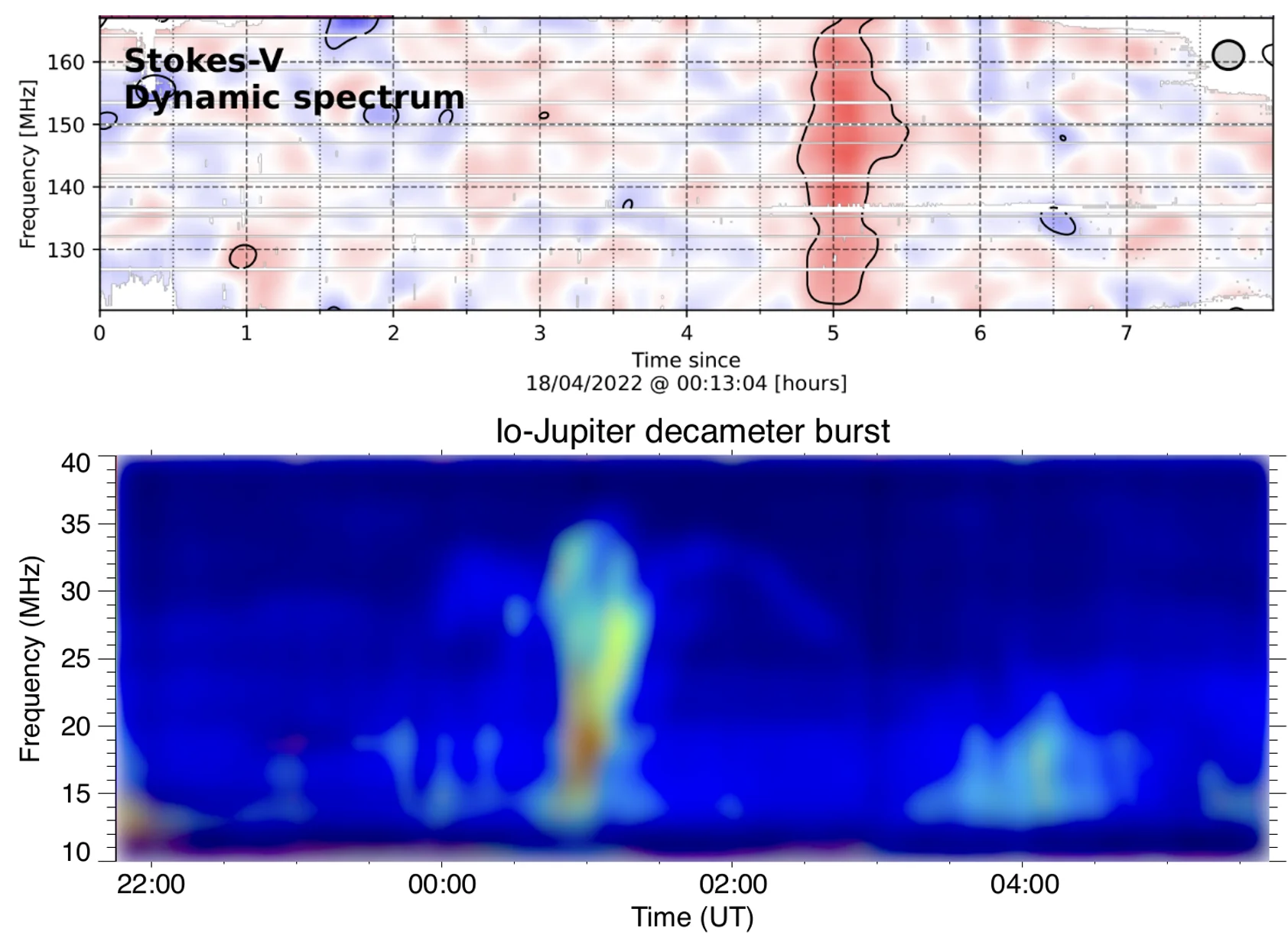
This image compares two radio bursts : at the top, a signal detected toward GJ 687, a red dwarf hosting an exoplanet ; at the bottom, a decametric burst from the Jupiter–Io system observed at Nançay.
Around Jupiter, electrons accelerated by the interaction between Io and Jupiter’s magnetic field generate intense radio emission, also associated with auroral processes. The similarity between the two signatures suggests that, in GJ 687, material escaping from a giant planet could be accelerated in the star’s magnetic field, producing coherent and strongly polarized radio emission.
Developed at LUX and LIRA, the RIMS method searches LOFAR archives for such bursts, opening a new route to studying magnetic interactions between stars and exoplanets.